ResearchSeaOn the roadmap
The sea lane is a supply chain
Most of what businesses buy crosses water. Vessels that go dark, unsafe routes and seabed cables are business risks. How we think about the sea.
Out of sight, still on the balance sheet
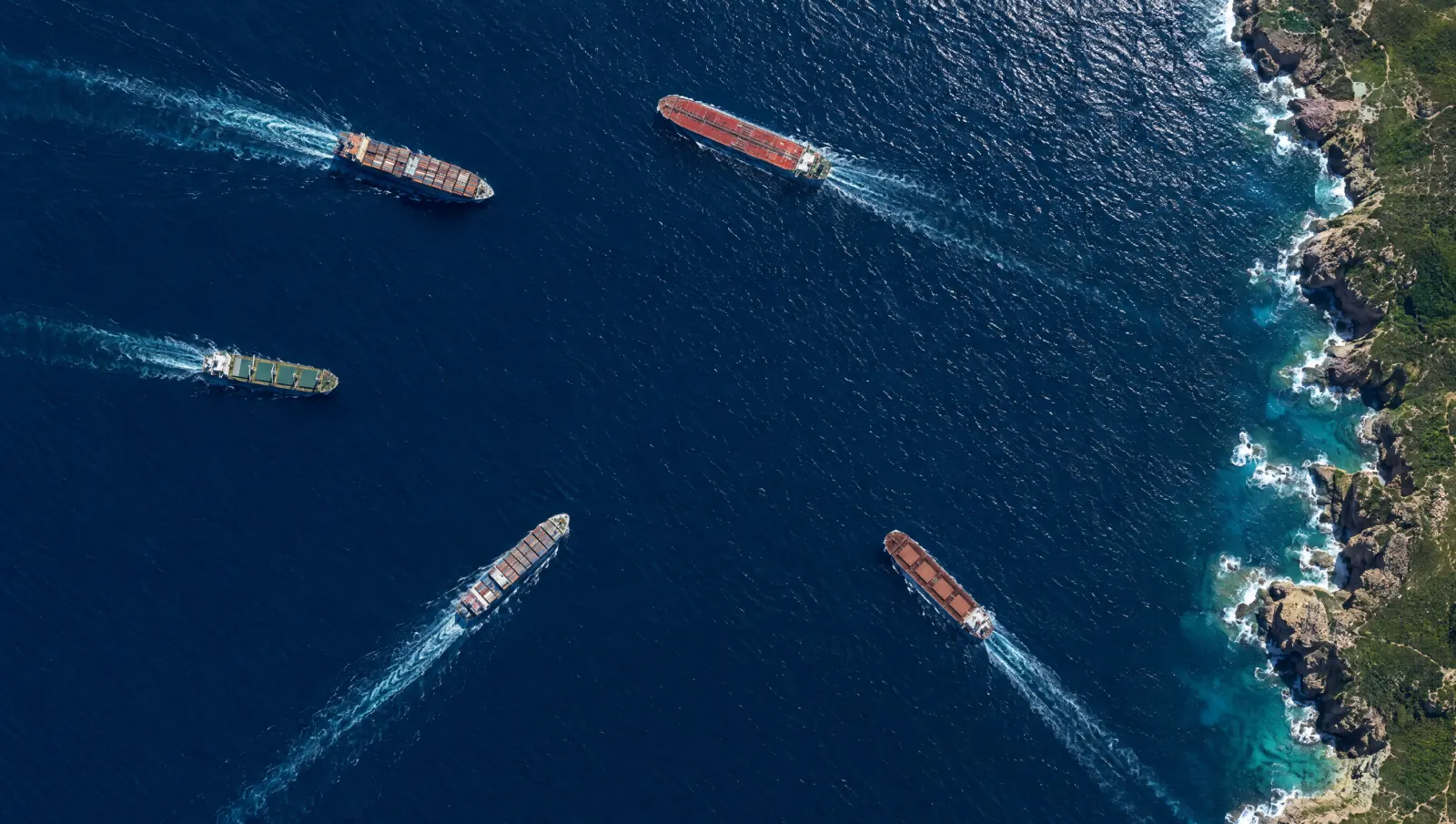
The ocean is where much of the world's trade moves and where much of its data travels, along cables on the seabed. It is also where visibility is weakest.
A vessel that stops transmitting, a route that becomes dangerous or damage to a subsea cable can reach a business long before the news does.
Our approach
The model. Vessel behaviour: one fused track per vessel, with models for going dark, loitering and leaving a safe route.
The aim is one track per vessel, however many sensors see it: transponder reports, coastal radar and satellite imagery fused into a single picture, with a vessel that goes quiet flagged rather than lost. Below the surface, the same view extends to the pipelines and cables businesses rely on, and to search and rescue when something goes wrong.
Why it matters to businesses
Shipping, energy, insurance, telecoms and any company with goods at sea share this exposure. Seeing it in the same place as the rest of their risk, cyber included, is the point.
Where this stands
Read more on the Sea page.
Published by Vamocles ·
Request a briefing